
Integrated Systems That Respond to Conditions
Smart Home Automation in Missoula for properties where lighting, climate, and security systems need centralized control and scheduling
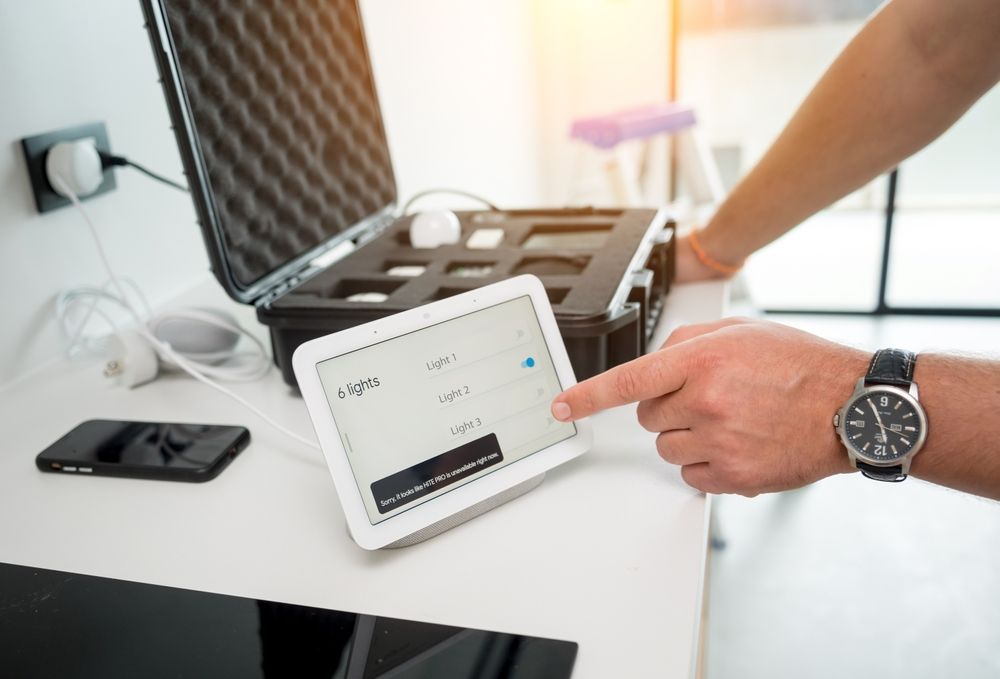
Smart home systems seamlessly integrate lighting circuits, thermostats, door locks, security cameras, and appliance controls using wireless protocols or low-voltage control wiring, enabling devices to communicate and react to pre-set conditions or remote commands. Edison Electric specializes in the installation of automation infrastructure, connecting devices throughout Missoula homes for owners who desire scheduled lighting adjustments, remote temperature control, automated door locking, or synchronized responses to specific triggers like motion detection or door openings. This advanced system lets you manage multiple devices from one central interface, eliminating the need to adjust each component individually, while automatically executing preset routines without manual interference once conditions are established.
The installation process includes mounting control hubs that connect with individual smart devices, configuring network settings to ensure all components remain linked to your wireless system, and programming automation rules that dictate actions based on particular circumstances. Compatible devices feature dimmer switches that modify lighting levels according to schedules, intelligent thermostats that adapt to your usage habits and adjust temperatures before your arrival, motorized shade controllers that operate based on the sun's position, and door locks that automatically engage at designated times.
Schedule a smart home consultation to determine which systems can benefit from automation tailored to your property layout and usage patterns.
What Integrated Control Systems Accomplish
Automation platforms employ if-then logic to craft scenes and routines in which a single action can prompt several outcomes—a "leaving home" command, for instance, may lock doors, set the thermostat to away mode, switch off specific lights, and arm security cameras all at once. Device compatibility hinges on the communication protocol used; some systems connect directly via Wi-Fi to the router, while others utilize Zigbee or Z-Wave mesh networks that relay signals to enhance range, and some operate on proprietary protocols necessitating brand-specific hubs.
Once the automation setup is complete, your lights adjust seamlessly throughout the evening in accordance with sunset times, negating the need for manual dimming. Your thermostat intelligently lowers heating during your usual absence, then preps for your arrival by returning to a comfortable temperature, while your door locks automatically engage at a predetermined time each night, even if you forget to check them yourself. Additionally, you'll receive notifications for specific occurrences, such as a door opening while in away mode or motion detected in specified areas. You can also adjust climate or lighting settings remotely from anywhere with network access instead of needing to be physically present.
Expanding the system allows for the addition of new devices as your needs evolve; however, compatibility constraints necessitate remaining within the same protocol ecosystem or employing hubs that accommodate multiple protocols. Integration with voice control links automation systems to voice assistants, enabling them to execute commands and scenes through verbal instructions, thereby eliminating the need to access apps for routine adjustments.
What Property Owners Usually Ask
Residents contemplating automation seek to grasp how systems interconnect and what is needed for infrastructure installation.
What infrastructure does smart home automation require?
Most wireless automation requires a stable home network and adequate Wi-Fi coverage throughout controlled areas, while some systems use dedicated low-voltage control wiring that runs from a central hub to individual device locations.
How do smart switches differ from regular dimmer switches?
Smart switches contain wireless radios and processors that receive commands from control hubs or phone apps, while standard dimmers only provide local manual control through the physical switch interface.
Why do some smart devices stop responding after installation?
Devices lose connection when Wi-Fi signal strength drops below operating threshold, when network settings change and devices cannot reconnect, when firmware updates fail partway through installation, or when mesh network devices lose their relay path to the hub.
Can existing light switches be replaced with smart controls?
Standard switches can be replaced with smart switches if the electrical box contains a neutral wire, which provides the constant power smart switches need to maintain wireless connection even when the light is off, though older Missoula homes sometimes lack neutral wires in switch boxes.
What happens to automation systems during internet outages?
Systems that rely on cloud processing lose remote access and voice control during internet outages, while systems with local processing hubs continue executing programmed schedules and scenes using the internal network even when internet connection fails.
Edison Electric conducts a thorough assessment of the current electrical infrastructure and network coverage prior to suggesting particular automation components. Arrange a system design consultation to create a tailored automation plan for your Missoula property that aligns with your control preferences.