Keep Your Operations Running Without Interruption
Industrial electrical services in Missoula for equipment failures and unplanned downtime
Edison Electric provides industrial electrical services for manufacturing facilities, processing plants, and commercial operations throughout Missoula. Your production schedule depends on electrical systems that operate under constant load, and when motors fail, control panels short out, or distribution equipment stops functioning, you need electricians who understand how industrial power systems are built and how they fail. These are not residential repairs scaled up but purpose-built installations with three-phase power, motor control centers, and coordination requirements that affect entire production lines.
This service includes installation of new electrical infrastructure for industrial equipment, troubleshooting and repair of existing systems, and scheduled maintenance to prevent failures before they halt operations. The work may involve replacing damaged conductors in conduit runs, rebuilding motor starters, upgrading panels to handle increased loads, or installing variable frequency drives to improve motor efficiency. Cold weather in Missoula can affect outdoor switchgear and junction boxes, and inspections account for temperature-related expansion, moisture intrusion, and insulation degradation common in equipment exposed to seasonal conditions.
If your facility is experiencing repeated breaker trips, inconsistent motor performance, or equipment that no longer meets current production demands, scheduling an assessment helps identify whether the issue is a component failure or a system that has outgrown its original capacity.
How Industrial Electrical Work Differs From Commercial Installations
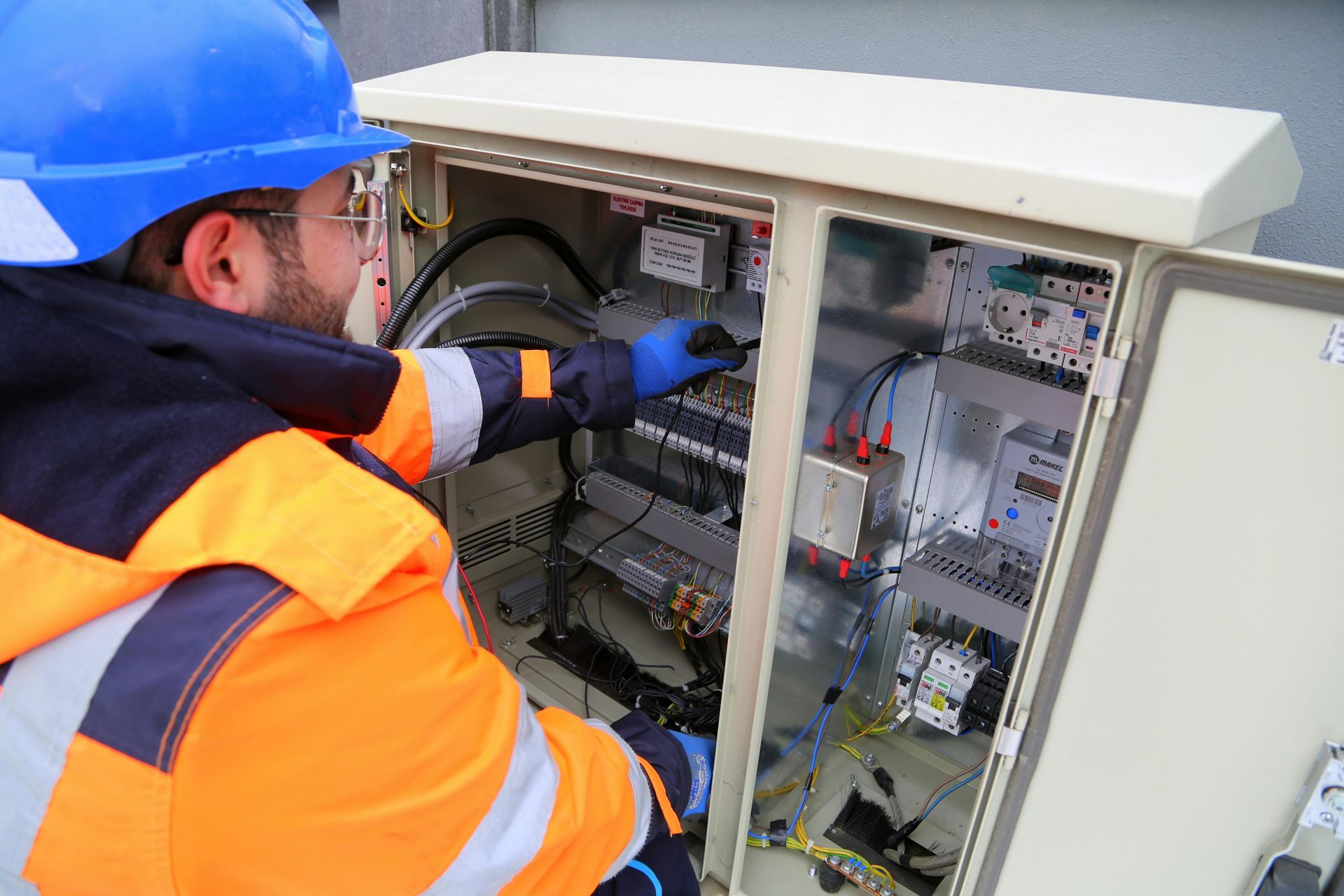
When you work with industrial systems, the electrical load is not evenly distributed throughout the day. Equipment cycles on and off based on production needs, creating inrush currents and harmonic distortion that standard wiring cannot handle safely. Electricians performing this work use insulated tools rated for the voltage present, verify lockout-tagout procedures before opening enclosures, and test circuits with calibrated instruments to confirm that voltage, current, and grounding meet the specifications required by the equipment manufacturer and the National Electrical Code.
After the work is completed, you will notice that breakers no longer trip unexpectedly, motors start smoothly without flickering lights elsewhere in the facility, and control systems respond predictably to input commands. Edison Electric documents all work performed, including torque settings on terminal connections, insulation resistance readings, and labeling updates, so your maintenance team has accurate records for future troubleshooting and compliance audits.
Preventative maintenance visits include thermal imaging of electrical panels to detect hot spots before they cause failures, inspection of contactors and relays for wear, and tightening of connections that loosen over time due to thermal cycling. This service does not include process control programming or instrumentation calibration, which require separate specialized technicians, but it does cover all power distribution and motor control components up to the point where they interface with automated systems.
Questions About Industrial Electrical Work in Missoula
These are the questions facility managers and maintenance supervisors ask most often when planning electrical work that affects production schedules and safety compliance.
What happens during an industrial electrical inspection?
The electrician de-energizes the equipment following lockout-tagout protocols, opens panels to examine connections and components, uses a thermal camera to identify overheating parts, and tests insulation resistance and grounding integrity. You receive a written report with photos and recommendations prioritized by risk level.
How quickly can emergency industrial electrical service reach a facility in Missoula?
Edison Electric offers around-the-clock emergency response to minimize downtime, with electricians dispatched as soon as you call. Response time depends on the location within the service area and the availability of specialized equipment needed for your specific system.
Why do circuit breakers trip repeatedly even after resetting?
Repeated tripping usually indicates that the load exceeds the breaker rating, a short circuit exists downstream, or the breaker itself has degraded and no longer trips at its labeled value. An electrician traces the circuit, measures the actual load, and tests the breaker to determine whether the problem is overcurrent, a fault, or failed protection.
When should older industrial electrical panels be replaced rather than repaired?
Replacement becomes necessary when panels no longer have available capacity for additional circuits, when replacement parts are no longer manufactured, or when the existing equipment does not meet current safety standards for arc flash protection and proper labeling. Upgrading also makes sense if your facility has added equipment that increases electrical demand beyond what the original installation was designed to handle.
What safety standards apply to industrial electrical work in Montana?
All work must comply with the National Electrical Code, OSHA regulations for electrical safety in the workplace, and any additional requirements specific to your industry such as food processing or hazardous locations. Electricians working on energized equipment use arc-rated clothing and follow NFPA 70E guidelines to reduce the risk of shock and arc flash injuries.
Edison Electric works with facilities that cannot afford extended shutdowns and need electrical systems that operate reliably under demanding conditions. If your equipment is aging, your production needs have changed, or you need a maintenance plan that prevents failures instead of reacting to them, contact the team to discuss what your facility requires and how the work can be scheduled around your operations.