Keep Your Home Running When the Grid Goes Down
Battery Backup & Storage Installation in Electrical services for maintaining power during outages and grid failures
Edison Electric installs battery backup and storage systems that keep your refrigerator cold, your sump pump running, and your internet router online when the power cuts out. You rely on electricity for more than just lights, and a prolonged outage can mean spoiled food, flooded basements, and lost productivity. Whether you're preparing for storm season or just tired of resetting clocks after every flicker, a professionally installed battery system gives you the capacity to ride out interruptions without scrambling for candles or hoping the utility restores service before your phone dies.
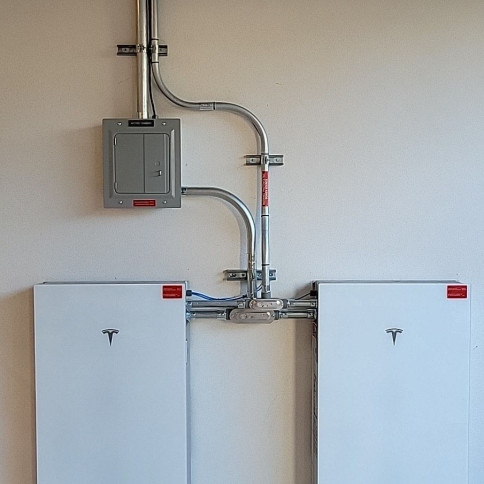
This service involves selecting, sizing, and installing lithium-ion battery units such as the Tesla Powerwall, Anker portable power stations, or Jackery systems depending on your load requirements and installation constraints. The work includes electrical panel integration, load calculations to identify which circuits you need backed up, and configuring the system to charge from the grid or from solar panels if you already have them. You end up with a system that automatically switches over when it detects an outage, so you never have to flip a switch or start a generator.
If you want to discuss which backup capacity matches your household needs, reach out to Edison Electric to schedule an evaluation of your electrical panel and typical usage patterns.
How Battery Storage Systems Are Installed and Configured
Your installation begins with a load assessment where the electrician measures the draw from circuits you want to protect, such as your heating system, kitchen appliances, and medical equipment. The system is sized based on how many kilowatt-hours you need to cover and how long you expect to run without grid power. A Tesla Powerwall, for example, stores 13.5 kWh and can handle most essential circuits for several hours or more depending on simultaneous usage. Smaller Anker or Jackery units work well for targeted backup like keeping a single room functional or powering communication devices during shorter outages.
After the unit is mounted and wired into a dedicated subpanel or transfer switch, you'll notice that when the grid drops, your lights stay on in the rooms you've prioritized, your refrigerator continues to hum, and your Wi-Fi router never loses connection. Edison Electric configures the system so it recharges automatically when grid power returns, and if you have solar panels, the battery can store daytime generation for use at night or during peak rate periods.
The installation requires a permit and inspection to verify proper grounding, overcurrent protection, and compliance with the National Electrical Code. The system does not power your entire house unless specifically designed as a whole-home backup, which requires a larger battery bank and additional panel work. Most residential installations focus on critical circuits to balance cost and runtime.
Common Questions About Battery Backup Systems
Homeowners often wonder how these systems differ from generators, how long they last, and whether they work with existing solar arrays. Here are answers to the questions Edison Electric hears most often.
- What happens to the battery when the power comes back on? The system automatically stops discharging and begins recharging from the grid or your solar panels, returning to standby mode until the next outage without any input from you.
- How long does a Tesla Powerwall keep my refrigerator running? A typical refrigerator draws around 150 watts while running, so a fully charged Powerwall can keep it going for several days if it's the only load, but runtime drops as you add lights, computers, and other devices.
- Why would I choose an Anker or Jackery unit instead of a Powerwall? Portable battery stations are easier to move, require no hardwiring, and cost less upfront, making them a practical choice if you only need backup for a few devices or want a system you can take camping or use in a workshop.
- Can I add battery storage to my solar panels later? Yes, most modern solar inverters support battery integration, and Edison Electric can retrofit a storage system to an existing solar installation as long as the inverter is compatible or replaced with a hybrid model.
- How often do these batteries need replacement? Lithium-ion battery systems typically retain around 70 to 80 percent of their original capacity after 10 years of regular cycling, and most manufacturers offer warranties covering that period before you'd consider a replacement.
If you're weighing the cost of a hardwired system against a portable solution or trying to calculate how much backup capacity you actually need, Edison Electric can walk you through the options based on your panel layout and typical outage duration in your area.