Heaters That Stopped Working Get Fixed
Electric heater repair and replacement in Missoula for units that produce no heat, trip breakers, or fail to hold temperature
A heater that runs but doesn't warm a room, a thermostat that never shuts the unit off, a baseboard that trips its breaker every time it cycles on—these are the failure patterns Edison Electric diagnoses and repairs in Missoula. The process starts with identifying the specific component that has failed rather than replacing the entire unit when a targeted repair will restore function. Malfunctioning thermostats, failed heating elements, and wiring problems each produce different symptoms, and distinguishing between them accurately determines whether a repair or a full replacement is the right path forward.
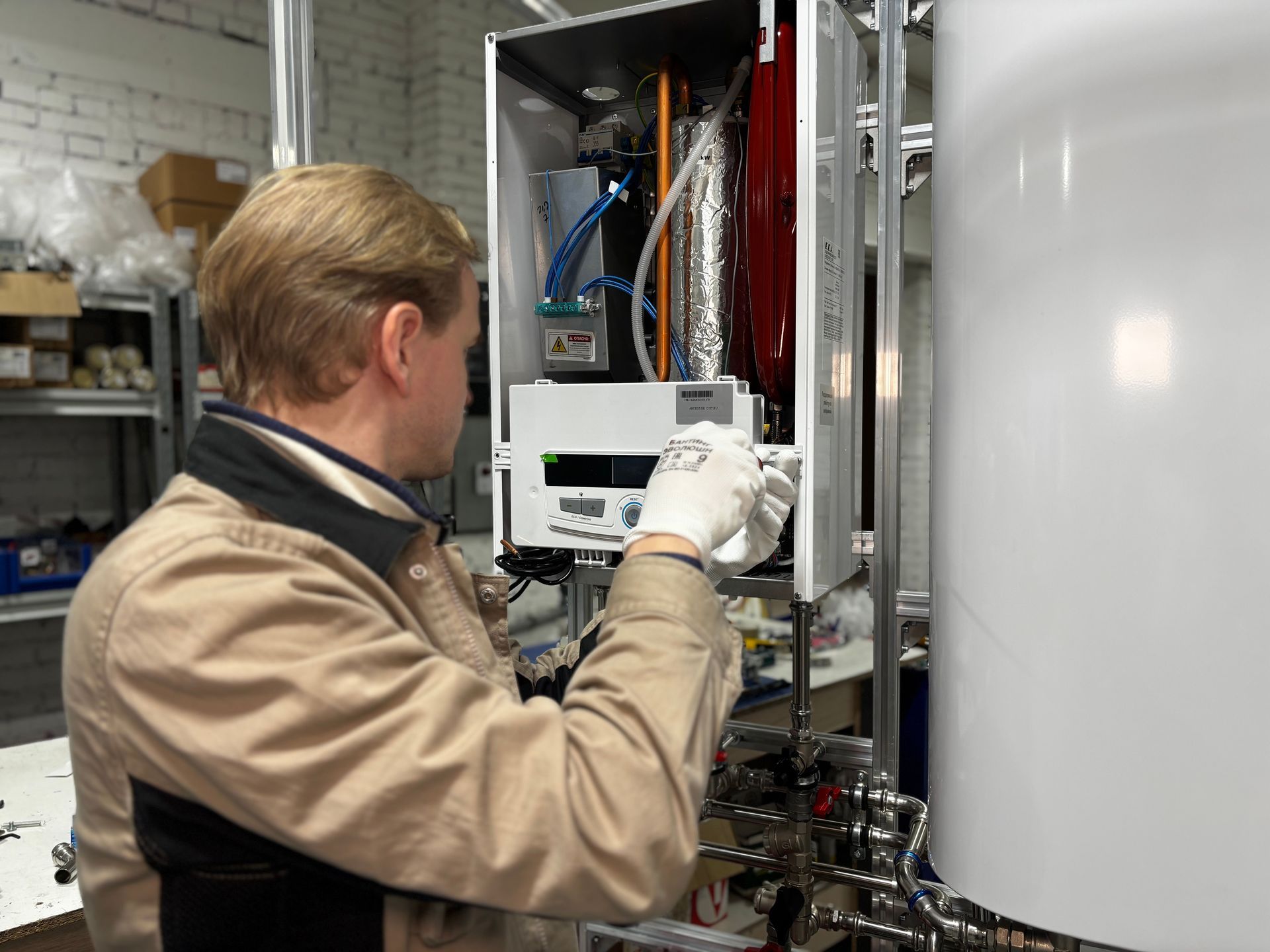
Diagnostic work involves testing voltage at the unit's terminals, checking continuity through the heating element, and evaluating thermostat response to confirm it's opening and closing the circuit at the correct temperature. Failed heating elements are a common finding in units that have been in service for many years—the element draws no current when tested, the breaker holds fine, but no heat is produced. In Missoula homes and commercial buildings where electric heaters have been in place since the 1980s or earlier, element failure and thermostat drift are the two most frequent causes of inadequate heat output.
Bring Edison Electric in to diagnose the specific cause before purchasing a replacement unit that may not be necessary.
Why Heating Problems Happen and How to Stop Them
Most electric heater failures trace back to one of three sources: a heating element that has burned out, a thermostat that has drifted out of calibration or failed its internal switch, or a wiring issue at the connection points—loose terminals, degraded insulation, or an undersized circuit that has been causing intermittent overloading for years. Edison Electric works through each of those possibilities systematically, using a multimeter to test resistance and continuity at each component before drawing conclusions about what needs to be replaced.
After a successful repair, the most immediate observable change is that the heater produces heat at the output level it was designed for and holds room temperature at the thermostat setting without running continuously or shutting off prematurely. A unit that previously produced a burning smell—often the result of dust accumulation on a degraded element—will stop producing that odor once the element is replaced and the unit is cleaned before reassembly.
Replacement becomes the recommended path when the unit's age makes component availability unreliable, when the cost of parts approaches the cost of a new unit, or when the existing heater was undersized for the space it was heating—a condition that accelerates wear on every component and means repairs will recur regardless of how well each individual fix is executed.
Questions Before Starting Your Project
The questions below address how electric heater repair and replacement work is carried out—what the diagnostic process involves, how replacement decisions are made, and what to expect from a repaired unit.
How does an electrician determine whether a heating element has failed?
The element is tested for continuity using a multimeter—a functioning element shows measurable resistance across its terminals, while a failed element reads as an open circuit with no continuity, confirming it is no longer completing the electrical path needed to generate heat.
What symptoms indicate a thermostat problem rather than a failed heating element?
A heater that runs continuously without cycling off, or one that never turns on despite the thermostat being set above room temperature, typically points to a thermostat that has lost its switching function, since a failed element produces no heat at all rather than uncontrolled or absent cycling.
When is full replacement the more practical choice over repairing an existing unit?
Replacement makes more sense when the unit is more than 15 to 20 years old and components are no longer stocked by the manufacturer, when the repair cost exceeds roughly half the price of a comparable new unit, or when the original installation used a heater that was undersized for the room it was meant to heat.
How does the age of Missoula's housing stock affect heater repair work?
Many residential properties in Missoula were built between the 1950s and 1980s with electric heating systems that have been in continuous service since original construction—those units may have aluminum branch circuit wiring at the connections, which requires specific terminals and anti-oxidant compound at any point where connections are remade during repair.
What should a repaired or replaced heater do differently that confirms the work was successful?
The unit should reach its thermostat set point within a normal operating cycle, cycle off cleanly once that temperature is reached, and hold that temperature without running continuously—and the circuit breaker should remain in the on position through multiple heating cycles without tripping.
Edison Electric also performs electric heater repair and replacement in Hamilton, Lolo, Frenchtown, and Stevensville. Describe what your unit is doing—or not doing—when you contact Edison Electric so the right diagnostic approach can be prepared before the visit.