
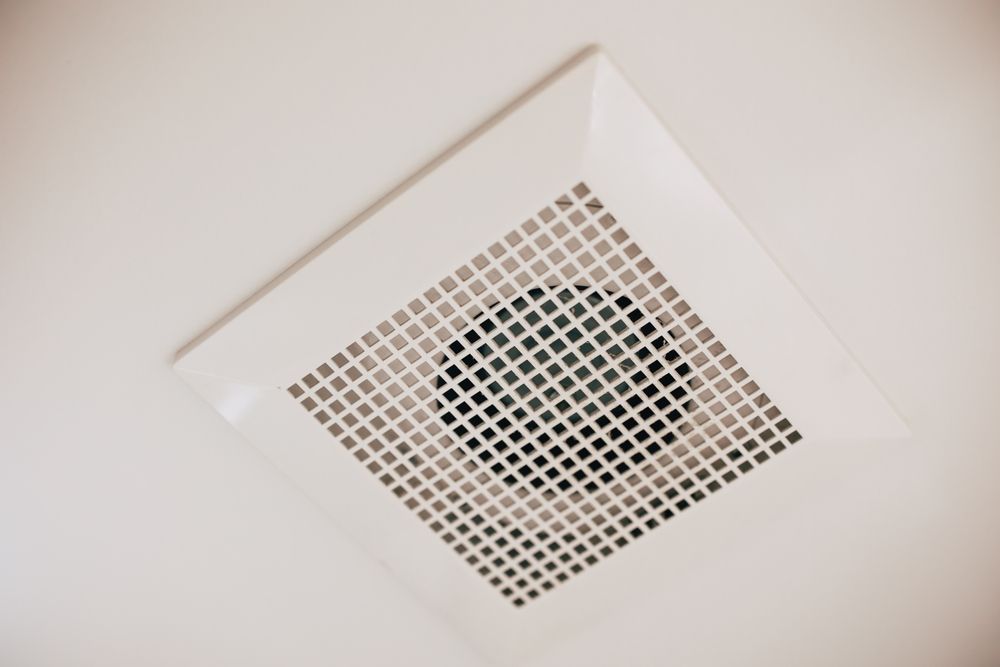
Stopping Moisture Before It Damages Your Home
Bathroom fan installation and replacement in Hamilton for historic homes facing trapped humidity and mold risk
Historic homes throughout the Bitterroot Valley face a common threat that often goes unnoticed until paint begins peeling or dark spots appear along bathroom ceilings. Edison Electric installs and replaces bathroom exhaust fans in Hamilton, addressing the humidity problems that plague older homes lacking adequate ventilation. Modern fans remove moisture-laden air completely, venting it outside rather than allowing it to condense inside wall cavities or attic spaces where mold growth begins.
Proper bathroom ventilation requires more than mounting a fan to the ceiling—the ductwork must carry humid air entirely outside the home, not simply push it into an attic or crawlspace where it will condense on cold surfaces during Montana winters. Many older installations route exhaust into unventilated spaces, creating the exact moisture accumulation that leads to expensive remediation work later.
Schedule a ventilation assessment to evaluate your current system and identify any ducting that terminates inside your home.
What Proper Ventilation Actually Accomplishes
Modern bathroom fans operate at sound levels below 0.5 sones, quieter than a refrigerator running in the next room, while moving 50 to 110 cubic feet of air per minute depending on bathroom size. This combination of effective air movement and near-silent operation represents a significant upgrade from the loud, inefficient builder-grade fans installed in many residential properties during the 1980s and 1990s.
Once a new fan system is running, you will notice bathroom mirrors clearing faster after showers, elimination of that lingering damp smell in towels, and paint or wallpaper that no longer bubbles or peels near the ceiling. The air inside the bathroom feels noticeably drier within minutes of turning the fan on, and windows stop fogging completely during cold weather.
Installation includes verifying that all ductwork terminates outside through either a roof jack or soffit vent, meeting local building code requirements for mechanical ventilation. Fans can also be wired to humidity sensors that activate automatically when moisture levels rise, eliminating the need to remember to turn them on manually.
Questions Homeowners Ask About Fan Upgrades
Bathroom ventilation work in Hamilton often raises questions about installation requirements, duct routing options, and the differences between fan models available today.
What makes modern fans quieter than older models?
Current fans use permanently lubricated motors with rubber mounting brackets that isolate vibration, compared to older units with metal housings that transmitted motor noise directly into ceiling joists.
How is the ductwork routed to the outside?
The path depends on your home's structure—attic installations typically vent through the roof using insulated flexible duct and a weatherproof cap, while basement bathrooms may require rigid duct running horizontally to an exterior wall.
Why does the fan need to vent completely outside?
Moisture released into attics or crawlspaces condenses on cold surfaces during Montana winters, leading to wood rot, insulation damage, and mold growth that spreads throughout concealed spaces before becoming visible.
When should the fan run during and after showers?
Running the fan during the shower and for 20 minutes afterward removes the majority of airborne moisture before it can condense on surfaces, which is why timer switches or humidity sensors prove useful for consistent operation.
What size fan does a bathroom actually need?
Fan capacity is determined by bathroom square footage—spaces under 100 square feet typically require 50 CFM units, while larger bathrooms or those with separate shower enclosures need 80 to 110 CFM models to achieve adequate air changes per hour.
Edison Electric handles complete bathroom ventilation upgrades, from removing outdated fans and rerouting improper ductwork to installing code-compliant systems that protect your home from moisture damage year-round. Request a consultation to review your current bathroom ventilation and discuss replacement options suited to your home's layout.