Power Supply Built for High-Amperage Equipment
Welder outlet installation in Missoula for workshops running equipment that trips standard circuits
When standard outlets fail to support your welding equipment, you're left with tripped breakers and interrupted work. Edison Electric installs dedicated welder outlets in Missoula designed to handle the sustained amperage welding machines demand. This work involves running appropriately rated circuits from your panel to the exact location where your welder operates, with wire gauge and breaker sizing matched to the machine's electrical requirements.
Welding equipment typically requires 240-volt circuits with amperage ranging from 30 to 50 amps depending on machine specifications. The installation involves verifying your existing panel capacity, selecting the correct wire gauge to prevent voltage drop over the circuit run, and mounting a receptacle that matches your welder's plug configuration. In colder climates like Missoula, garage and shop environments often require conduit protection for wiring exposed to temperature swings and potential physical impact.
Schedule an on-site evaluation to determine the correct circuit specifications for your welding equipment.
What Proper Welder Outlet Installation Requires
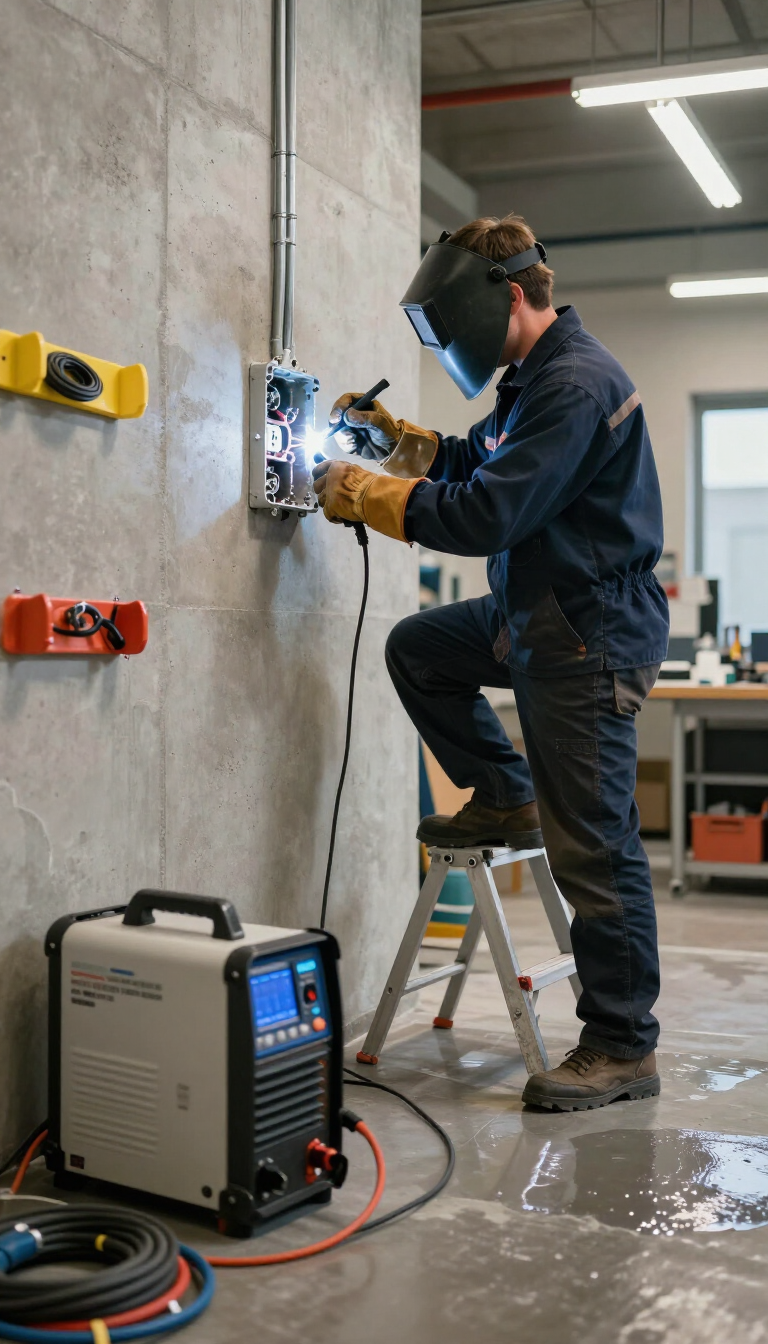
The installation begins with confirming your welder's nameplate amperage and voltage requirements, which dictates wire size, breaker rating, and receptacle type. You'll see a dedicated circuit run from your electrical panel to the outlet location, with wire sized to carry the full load without overheating and breaker protection matched to both wire capacity and equipment demand. Conduit is often used in garage settings to protect wiring from accidental damage and meet code requirements for exposed installations.
Once the circuit is energized, your welder operates without tripping breakers during sustained use, and you no longer experience dimming lights or interrupted power when the arc strikes. The outlet remains cool during operation, voltage stays consistent throughout the welding cycle, and your equipment performs at full capacity without the limitations imposed by undersized circuits.
Panel capacity must be sufficient to add the new circuit without exceeding the main breaker rating. If your panel is already near capacity, a subpanel or service upgrade may be necessary before the welder circuit can be safely added. The outlet location should account for cord length and workspace layout to avoid extension cord use, which creates additional voltage drop and safety concerns.
Questions Before Installing Your Welder Outlet
These details help clarify what the installation involves and what factors affect the approach in Missoula workshops and garages.
What information is needed before starting the installation?
The welder's voltage and amperage requirements from the nameplate determine circuit specifications, and the distance from your panel to the outlet location affects wire sizing to prevent voltage drop over the run.
How is the circuit sized for welding equipment?
Wire gauge is selected based on the welder's amperage draw and circuit length, with breaker rating matched to protect the wire without nuisance tripping during normal welding operations.
Why does outlet type matter for welders?
Receptacle configuration must match your welder's plug type, typically NEMA 6-50 or 14-50 depending on amperage, and the outlet must be rated for the full circuit capacity to handle sustained high-amperage loads.
What happens if the panel is already full?
If no breaker spaces remain or the panel is near its rated capacity, a subpanel can be installed to provide additional circuit capacity, or in some cases a service upgrade is required to support the added load safely.
How does cold weather in Missoula affect garage wiring?
Conduit protection is often required for wiring in unheated spaces where temperature extremes and potential impacts are common, and proper installation accounts for expansion and contraction cycles that affect connections over time.
Edison Electric sizes circuits based on your specific equipment requirements and existing panel conditions. Arrange a consultation to review your welder specifications and determine the installation approach for your workspace.