
Circuits Designed for Workshop Power Demands
Garage electrical wiring in Missoula for properties adding equipment that exceeds existing outlet capacity
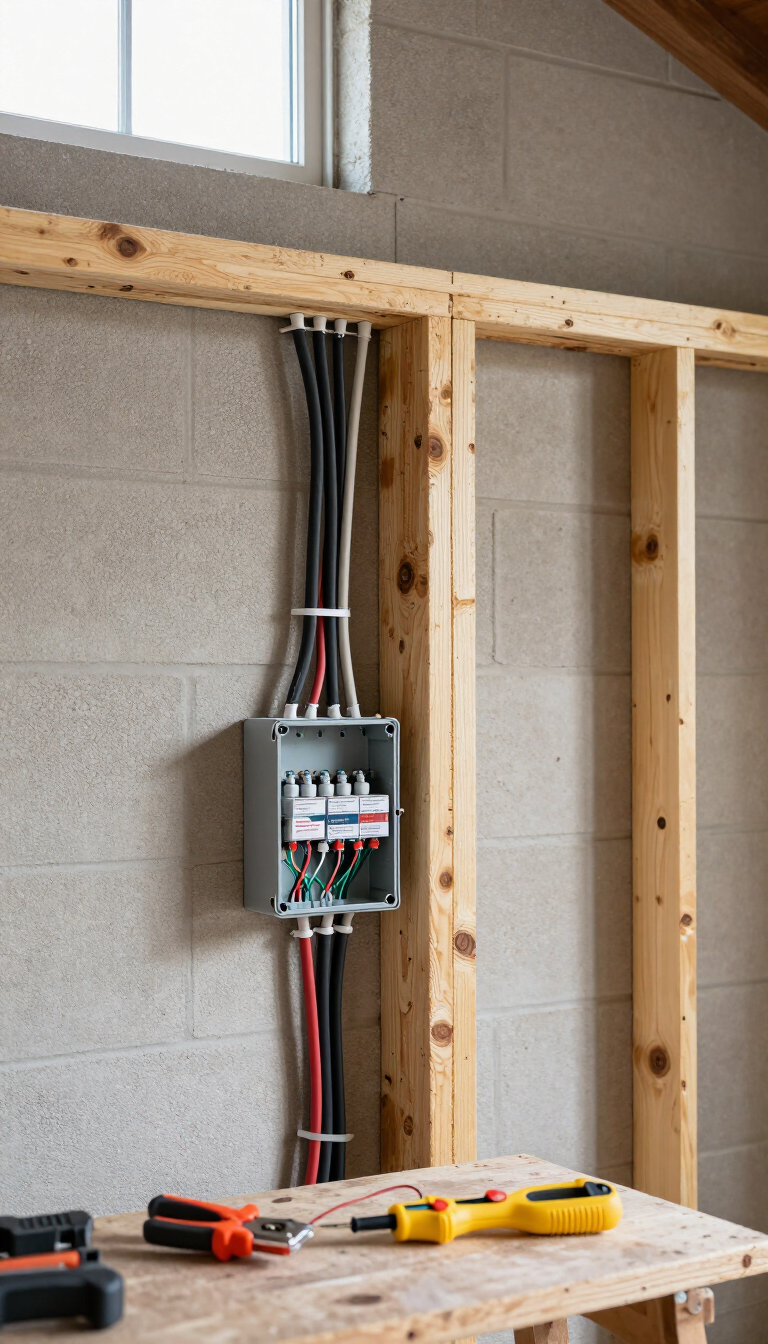
Garages converted to workshops frequently operate with inadequate electrical systems—undersized circuits, insufficient outlet placement, and panels unable to support the amperage modern equipment requires. Edison Electric installs garage electrical wiring that addresses these limitations, running new circuits to support welding machines, air compressors, and other high-draw tools. The work involves evaluating your current panel capacity, determining circuit requirements based on the equipment you'll operate, and installing wiring that meets code requirements for garage environments where exposure to temperature swings and physical impact is common.
Comprehensive garage wiring typically includes dedicated 240-volt circuits for heavy equipment, additional 120-volt circuits to eliminate overloading, and proper receptacle spacing to reduce extension cord dependence. Wire routing accounts for insulation exposure in unheated spaces and uses conduit where code or conditions require physical protection.
Request a detailed estimate based on your current garage layout and equipment plans.
How Garage Wiring Addresses Equipment Limitations
The process starts with identifying which equipment requires dedicated circuits versus shared circuits, calculating total amperage load, and confirming your panel can accommodate the additional breakers without exceeding service capacity. Wiring is routed to outlet locations that align with workbench placement and tool positioning, with circuit separation that prevents multiple high-draw devices from competing for the same breaker capacity.
After installation, you operate multiple tools simultaneously without tripping breakers, voltage remains stable during equipment startup, and outlets are positioned where work actually happens rather than forcing reliance on extension cords stretched across the workspace. Equipment performs consistently, breakers no longer interrupt projects mid-task, and the electrical system supports the garage's function as a working shop rather than limiting it.
Lighting circuits are typically separated from receptacle circuits to prevent work lights from cutting out when equipment starts. If your panel lacks sufficient capacity, adding circuits may require upgrading the main service or installing a subpanel to distribute the additional load without compromising safety or code compliance.
Answers to Frequent Garage Wiring Questions
Property owners in Missoula often ask these questions when planning workshop electrical upgrades.
How many circuits does a workshop garage typically need?
The number depends on equipment amperage and whether tools run simultaneously, but most functional workshops require at least two dedicated 240-volt circuits for heavy equipment and three to four 120-volt circuits for general outlets and lighting.
What determines whether conduit is required?
Code requirements vary based on whether wiring is surface-mounted or run through walls, and conduit is typically required in garages where wiring is exposed to potential impact or where temperature extremes affect wire insulation over time.
Why can't existing circuits handle added equipment?
Older garage wiring was often sized for minimal lighting and occasional tool use, with single 15-amp circuits serving the entire space, which cannot safely support sustained loads from compressors, welders, or multiple tools operating simultaneously.
When should the electrical work happen during a garage conversion?
Wiring installation is easiest before insulation and wall finishing, allowing open access to framing for wire routing, but upgrades can be completed in finished garages using surface conduit or by opening specific wall sections as needed.
What outlets are best for garage workspaces?
Receptacle type depends on equipment plug configuration, but workshops typically use a combination of standard 120-volt duplex outlets for general use and 240-volt outlets in NEMA 6-50 or 14-50 configurations for welders and other high-amperage equipment.
Edison Electric designs garage electrical systems around the specific equipment you plan to operate and the layout of your workspace. Schedule a property evaluation to review your current service capacity and determine the circuit configuration your workshop requires.