
Exterior Lighting That Activates on Movement
Security Lighting Installation in Missoula for entry points, driveways, and side yards where motion-activated illumination deters unwanted activity
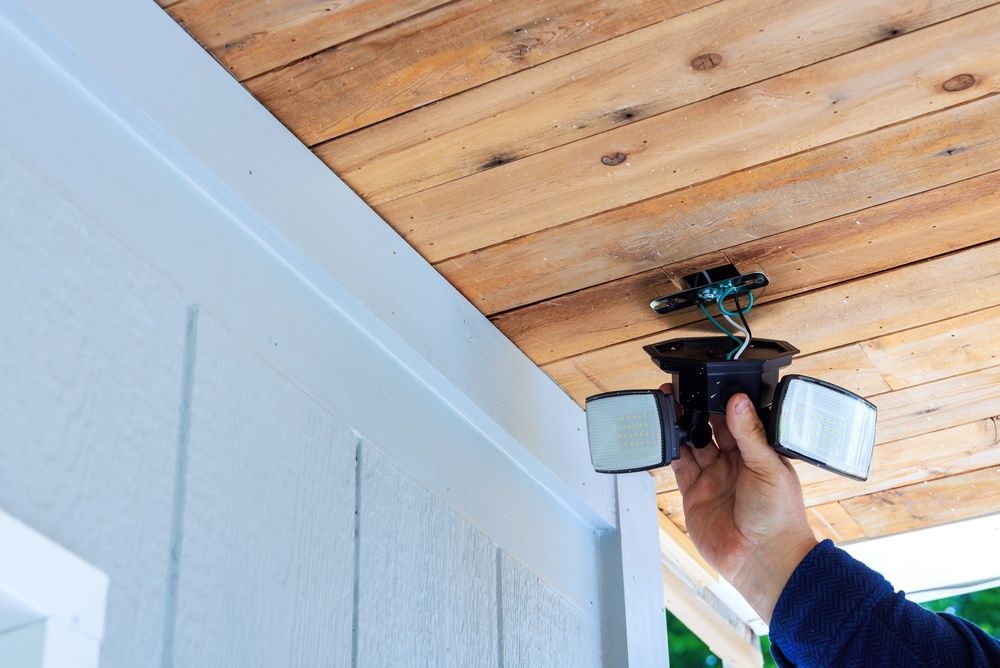
Missoula properties experience low ambient light during winter months when darkness extends from late afternoon through early morning, creating conditions where unlit approaches and entry points remain concealed from interior view and street visibility. Security lighting systems use passive infrared sensors that detect temperature changes from moving objects within a detection zone, triggering lights that illuminate specific areas when motion occurs. Edison Electric installs motion-activated fixtures and photoelectric controls at Missoula properties where driveways, walkways, gates, and building perimeters need automatic lighting that activates only when movement is detected rather than burning continuously through dark hours.
Motion sensor coverage depends on mounting height, sensor angle, and detection range settings that determine how far from the fixture and within what field of view movement will trigger activation. Fixtures mount on building walls, eaves, or dedicated poles positioned to cover approach paths while minimizing false triggers from tree movement, passing vehicles, or small animals that cross the detection zone.
Schedule a property lighting assessment to identify coverage gaps and determine optimal fixture placement for your specific entry points and approach routes.
What Motion-Activated Systems Prevent Long-Term
Security lighting installations wire fixtures to dedicated circuits or junction boxes controlled by photoelectric sensors that prevent daytime operation, ensuring lights only have power to activate during dark hours when motion detection serves a security function. LED lamp technology reduces operating cost compared to incandescent or halogen security lights that consumed one hundred fifty to five hundred watts per activation, with current LED fixtures providing equivalent illumination at fifteen to forty watts and lasting twenty-five thousand hours before requiring lamp replacement.
Once installation is complete, your driveway illuminates when vehicles approach rather than remaining dark until you manually switch on lights, side yard areas flood with light when movement occurs in zones previously hidden from view, and entry doors activate lighting before you reach them instead of requiring you to navigate dark approaches. The fixtures remain off during daylight and when no motion occurs, eliminating the wasted energy of dusk-to-dawn lighting that burns regardless of activity, and detection zones can be adjusted to ignore low-level movement while responding to human-sized objects moving through the monitored area.
Advanced systems integrate multiple fixtures that trigger simultaneously when motion is detected in any zone, creating coordinated illumination across connected areas rather than isolated pools of light, and some incorporate camera systems that begin recording when lighting activates. Adjustment settings control sensitivity to prevent triggers from wind-blown vegetation, duration to determine how long lights remain on after motion stops, and ambient light threshold to set when photoelectric sensors allow motion detection to function.
Questions Before Starting Your Project
Property owners typically ask about coverage planning and sensor reliability before installing motion-activated security lighting.
What causes motion lights to trigger randomly when no one is present?
False triggers occur from heat sources such as heating equipment exhaust that creates temperature changes in the detection zone, from reflective surfaces that bounce infrared radiation into the sensor, from insects crawling directly on the sensor lens, or from detection sensitivity set too high for the installation location.
How do you prevent motion lights from activating for small animals?
Motion sensors detect temperature differential and movement speed, with sensitivity adjustments and mounting height selection used to create detection zones that ignore ground-level movement from cats and small wildlife while responding to human-height activity.
Why do some security lights fail to activate in cold weather?
Passive infrared sensors detect the temperature difference between a moving object and the background environment, so when winter air temperatures drop well below freezing, the contrast between a person and the surroundings decreases and reduces detection range compared to warmer conditions where the differential is greater.
Can motion lights be set to activate only certain fixtures?
Multi-fixture systems can be wired so that sensors trigger only designated lights rather than all circuits simultaneously, allowing approach lighting to activate separately from perimeter lighting based on which detection zone registers movement.
What detection range should security lights cover in Missoula installations?
Most residential motion sensors detect movement twenty to forty feet from the fixture depending on mounting height and sensor specifications, with positioning planned so that detection occurs far enough from entry points to illuminate approaches before someone reaches the door or window.
Edison Electric positions fixtures based on site-specific coverage requirements and tests detection zones after installation to verify sensitivity settings. Call our office to arrange a security lighting evaluation for your Missoula property's exterior areas and entry approaches.