Dedicated Circuits for High-Demand Appliances
Range/Oven/Dryer Circuits Installation & Repair in Missoula for kitchens and laundry rooms where existing wiring cannot support appliance amperage
Electric ranges draw between thirty and fifty amps during cooking cycles, while electric dryers pull twenty-four to thirty amps when heating elements engage, both requiring dedicated circuits with wire sized to handle sustained high current without voltage drop or heat buildup. Your kitchen outlets dim when the range heats up, or the dryer runs longer than it should because undersized wiring cannot deliver full voltage under load. Edison Electric installs new dedicated circuits and repairs failing connections in existing high-amperage lines serving Missoula properties where appliance performance suffers from inadequate electrical supply or where panel capacity limits prevent safe operation.
Dedicated appliance circuits run from the main panel directly to the appliance location without serving any other outlets or loads, preventing the voltage drop that occurs when multiple devices share a circuit and ensuring the appliance receives consistent power throughout its duty cycle. Wire gauge selection depends on circuit length and appliance amperage, with eight-gauge copper serving most thirty-amp dryer circuits and six-gauge copper handling typical forty-amp range circuits, though longer distances require larger conductors to maintain voltage within tolerance.
Arrange an appliance circuit assessment to verify your panel has adequate capacity and proper wire sizing for your specific range, oven, or dryer installation.
What Proper Appliance Wiring Requires
Range and dryer circuits use three-wire or four-wire configurations depending on installation date, with four-wire systems separating the neutral and ground conductors as required by code since 1996, while three-wire systems combine these functions in older installations that remain legal until the appliance changes. Connections terminate at the panel breaker, which must match the wire ampacity exactly—a thirty-amp breaker protects ten-gauge wire, a forty-amp breaker protects eight-gauge wire, and a fifty-amp breaker protects six-gauge wire.
Once Edison Electric completes the installation, your range heats all burners simultaneously without tripping the breaker or dimming lights elsewhere in the home, and your dryer completes cycles in normal time because the heating element receives full voltage throughout operation. The receptacle remains cool during use rather than warming from overloaded connections, and the breaker does not trip during peak appliance draw because the wire and breaker sizing match the actual load.
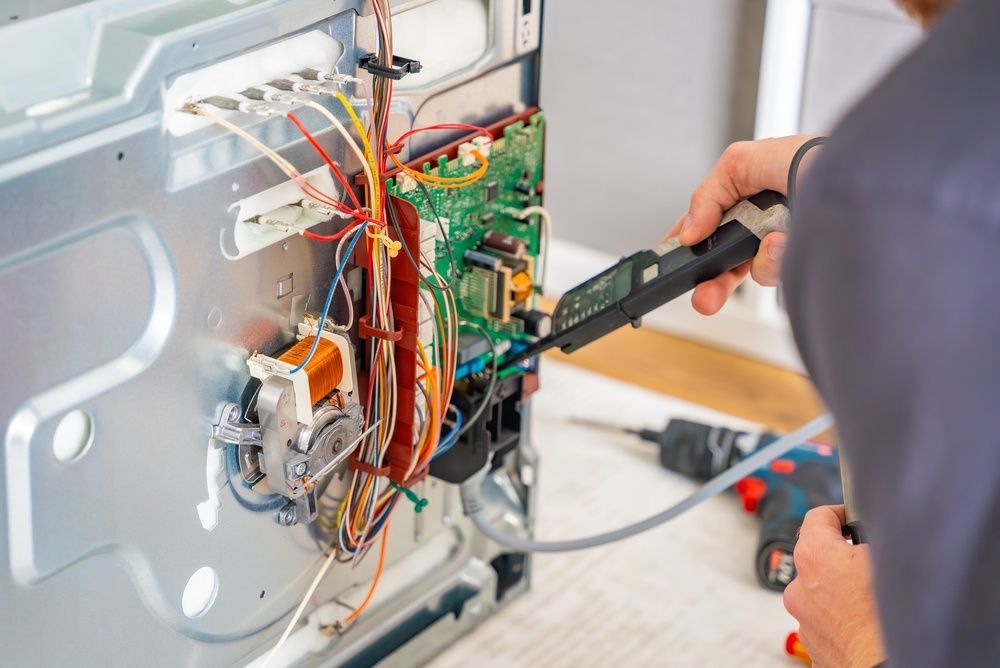
Repairs address loose terminal connections that create resistance and heat, corroded neutral connections that cause voltage imbalance between the two hot legs, and breakers that trip from internal wear rather than actual overload conditions. Upgrading from three-wire to four-wire configurations involves running new cable and installing a four-terminal receptacle, since the ground and neutral functions cannot share a conductor under current code when installing new circuits.
Common Questions Before Starting Installation
Homeowners typically want to understand circuit requirements and panel limitations before adding or repairing appliance circuits.
What size circuit does an electric range require?
Most electric ranges require a forty-amp or fifty-amp dedicated circuit with six-gauge or larger copper wire, though the specific requirement depends on the appliance nameplate rating which lists maximum amperage draw.
How do you determine if the panel has capacity for a new circuit?
Panel capacity depends on the main breaker rating and the total connected load from all circuits, calculated using the National Electrical Code demand factors that account for the statistical reality that not all circuits draw maximum current simultaneously.
Why does the dryer breaker trip during the heating cycle?
Dryer breakers trip from undersized wire that heats and increases resistance under sustained load, from heating elements that have shorted and draw excessive current, or from breakers that have weakened internally and trip below their rated amperage.
Can a range and wall oven share the same circuit?
Ranges and wall ovens cannot share circuits because each requires a dedicated line, and combining them would exceed the circuit ampacity during simultaneous operation when both heating elements draw maximum current.
What causes outlets behind ranges and dryers to melt?
Outlets melt from loose terminal connections that create high resistance and heat, from aluminum wire that expands and contracts with temperature cycles and loosens connections, or from plugs inserted partially so that current arcs across the small contact area between plug and receptacle.
Edison Electric sizes circuits based on actual appliance specifications and verifies panel capacity before installation. Contact us directly to schedule an evaluation for range, oven, or dryer circuit work in your Missoula home.